@yosp @GAMEBasildon Hi guys, this isn't true. We can say that officially.
— PlayStation Europe (@PlayStationEU) October 18, 2013
Friday, October 18, 2013
PlayStation Europe shuts down false PS4 Backwards Compatibility claims by Game.

Rumor: All PS3 digital content to carry over to PS4 ( Proof that Vector Co-Processor is real? )
Update: it was false!
--------------------------------------------------------------------------------------------------------

@yosp @GAMEBasildon Hi guys, this isn't true. We can say that officially.
— PlayStation Europe (@PlayStationEU) October 18, 2013
--------------------------------------------------------------------------------------------------------
Fantastic PlayStation meeting! Breaking Point - ALL your digital content from your PS3 WILL carry over on to your PS4! @yosp
— GAME Basildon (@GAMEBasildon) October 18, 2013
Breaking News from Game this morning is that PS3 games will carry over to the PS4.
This news has a lot of people wondering how is this possible when the PS4 doesn't have The Cell Processor for Backwards Compatibility & the Jaguar CPU cores are so weak?
The answer that I have come up with is that the Vector Co- Processor that I have been hinting at from time to time that no one else is talking about is real & it's able to emulate the SPE's of the Cell Processor so playing PS3 games on the PS4 can be a reality.
Another thought is that the SPE's are being emulated in compute.
Friday, October 11, 2013
PlayStation 4 & AMD Radeon R9 290X GPU share the same 8 ACE ( Asynchronous Compute Engines )
Newly leaked slides from AMD's new Radeon R9 290X Hawaii GPU reveals that the Volcanic Islands GPU will also feature 8 Asynchronous Compute Engines much like the Liverpool GPU inside of Sony's new PS4.
Each of the 8 ACE's can manage up to 8 compute queues for a total of 64 compute commands, in comparison the HD 7970 only has 2 ACE's that could only queue 2 compute commands for a total of 4 & the Xbox One only has 2 ACE's but they also manage up to 8 compute queues for a total of 16 compute queues.
Could this mean that the PS4's GPU is also a part of AMD's Volcanic Islands family?


Below is a diagram of the PlayStation 4 Compute, Queues and Pipelines from VGleaks

"PS4 GPU has a total of 2 rings and 64 queues on 10 pipelines
- Graphics (GFX) ring and pipeline
- Same as R10xx
- Graphics and compute
- For game
- High Priority Graphics (HP3D) ring and pipeline
- New for Liverpool
- Same as GFX pipeline except no compute capabilities
- For exclusive use by VShell
- 8 Compute-only pipelines
- Each pipeline has 8 queues of a total of 64
- Replaces the 2 compute-only queues and pipelines on R10XX
- Can be used by both game and VShell (likely assign on a pipeline basis, 1 for VShell, and 7 for game)
- Queues can be allocated by game system or by middleware type
- Allows rendering and compute loads to be processed in parallel
- Liverpool compute-only pipelines do not have Constant Update Engines (presented in R10XX cards) "
Wednesday, October 9, 2013
AMD HSA ARCHITECTURE : Could we be looking at the PlayStation 4 SoC & not even know it? ( Fixed Function Accelerator & DPS )
You all might remember a interview with Sony's CTO last year where he talked about the future of PlayStation & he described the PS4 Chip as being a chip with most of the processing still being done by the CPU & GPU but also being helped out by DSP's & Programmable Logic
Fast forward to today & we have a SoC pictured in AMD's Next Generation APU (Kaveri ) & HSA presentation.

This SoC shown in the documents fit the description having a DSP & 'Fixed Function Accelerator' which could be the Vector Processor\ Compute Modular that some people have reported to have seen but we haven't heard much about it.
From EuroGamer
"However, there's a fair amount of "secret sauce" in Orbis and we can disclose details on one of the more interesting additions. Paired up with the eight AMD cores, we find a bespoke GPU-like "Compute" module, designed to ease the burden on certain operations - physics calculations are a good example of traditional CPU work that are often hived off to GPU cores. We're assured that this is bespoke hardware that is not a part of the main graphics pipeline but we remain rather mystified by its standalone inclusion, bearing in mind Compute functions could be run off the main graphics cores and that devs could have the option to utilise that power for additional graphical grunt, if they so chose."
From a trusted member on Ars Technica forums
From this person ?
Originally Posted by JonathanCarabalo
The PS4's world-famous Vector co-processor
A truly innovative feature - the Playstation 4's world-famous vector co-processor. It's connected to a CPU core. It doesn't look like much on paper:
- 100 million transistors
- 300 mhz
- $25 to produce
- 25 nm production process
- 16-way SIMD floating-point multiply-add instructions (512-bit)
- 1024-bit load-store instructions
- 512 Kbytes local memory
- L2 cache of the X86 CPU
- Write-to-memory feature - bypassing the CPU
- Has a connection to the instruction dispatch of a regular x86 Jaguar core
It doesn't look like much, except for the 16-way multiply-adder! Besides that though - it only costs $25.00. "How can $25.00 worth of CPU logic improve the graphics pipeline?" Thus - top-secret alien technology. The world-famous vector co-processor. With it - developers can pull off pretty amazing effects, in real-time. I've already seen:
Full-screen per-pixel lighting! Pretty amazing - I haven't seen any games do that.
Extremely realistic fire effects
Extremely realistic ice simulation
Massive degrees of normal/displacement mapping
And this is just the start.
_______________________________________________________________________
Originally Posted by JonathanCarabalo
SIMD Vector Processor Comparison
Playstation 3 - Cell
- Developed by IBM, Sony, and Toshiba - mostly IBM, at Austin Texas
- Based on the Power4 architecture, the PowerPC 970 main core
- 7, 128-bit Floating point multiply-adders
- 256 Kbyte local memory for each SPU
- 1 PowerPC 970-based main core
- 512 Kbytes L2 cache connected to the 7 SPUs via a Token-Ring bus - which they used to inter-communicate as well
- 200 GB/s EIB L2 cache bandwidth
- 3.2 ghz clockrate
- 230 million transistors
- $400 million to develop, $100 to produce
- 4-way SIMD
Playstation 4 - Vector Co-Processor
- Developed by AMD and me (just a joke)
- Based on the X86 architecture
- 1, 512-bit floating point multiply-adder
- 1.6 ghz clock rate
- 512 Kbyte local buffer + the CPU core's main buffer
- Connected to the bus directly via a bus-interface unit, and to a CPU core
- About 300 million transistors
- $0 to develop, $80 to produce
- 307.2 GB/s buffer to execution unit
- 16-way SIMD
- 8 X86-based cores, each with 128-bit FP unit, L2 cache, and shared local memory between pairs of CPUs and between all 8
16-way SIMD makes it 4 times faster, per clock. I.e. to do 16 FP multiply-adds, it takes 8 cycles. 4 load-stores, followed by 4 multiply adds - the Cell. But for the Vector Co-Processor to do 16 FP mulitply-adds, it takes 1 cycles. The Out-of-Order, 512-bit load-stores load the data, while the Vector Co-Processor is performing the data. Thus - the Vector Co-Processor alone is equal to 8 SPUs.
& from this person
The PS4 specter vector? I'm not a 100% sure what it is at this stage... I'm 45% leaning towards physics offloading or helping out within that department. The other 55% is screaming a modified component for helping PS3 games work within the G/Cloud environment.
|

And as you can see The SoC in the picture above is not Kaveri.

Sunday, October 6, 2013
Last Minute Wild PlayStation 4 Speculations because I'm bored ( don't believe it no matter how believable I make it sound )
Ok the 1st one is just a rumor I heard plus a lot of putting 2 & 2 together & getting 39 or something like that.
PS4 will come with a 500GB SSHD with 8 or 16GB of Flash on it.
I can back this up with a few old links that didn't have the full picture when they was leaked.
1st we shave VGLeaks -
Internal mass storage
2nd link is the old PS4 leak that 1st gave us the APU code name Liverpool & some other info that was right
So connecting these leaks & rumors together I say PS4 is coming with a SSHD with 8GB of Flash for the OS & patches.
maybe the Seagate ST500LM00 it's only $79 at Newegg with 8GB of NAND.
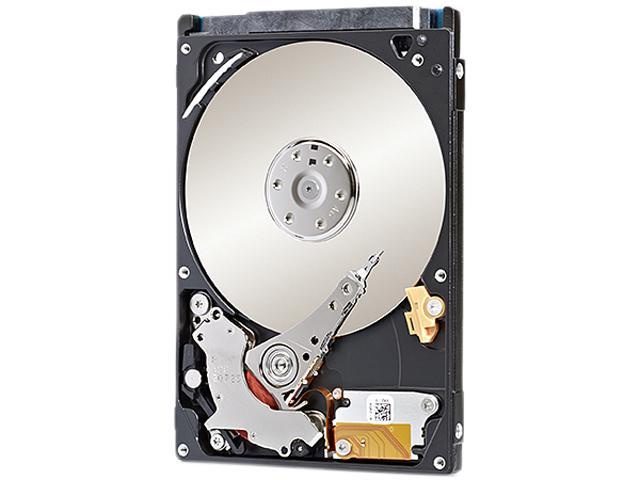
Seagate Solid State Hybrid ST500LM000 500GB 64MB Cache 2.5" SATA 6.0Gb/s Laptop Thin Hard Drive -Bare Drive
____________________________________________________
Now for the crazy speculations that I'm pretty much making up my self from my own speculations
PS4 APU might have a powerful Vector Unit on board as it's 'Fixed Function Accelerator' there has been a few hints of a vector co-processor but nothing solid but so it's still just wild speculations & wishful thinking from me.

Saturday, October 5, 2013
PS4 & AMD Kaveri APU both feature the Onion + HSA memory Bus (PlayStation 4 )
AMD new Kaveri APU features the same Onion+ Bus found in the PlayStation 4.
So it's pretty safe to say PlayStation 4 APU is Heterogeneous System Architecture.

PS4 Liverpool APU Memory Bus

Kaveri HSA Architecture


GDDR5 is shown in the Memory Hierarchy slide.

Subscribe to:
Posts (Atom)